If you’re planning a new home in Kansas, one of the first questions you’ll probably ask is simple: what is the best time of year to build a house in Kansas? The short answer: no season or month is perfect. After years of building experience in Kansas, as the best custom home builder Kansas, we have learned that the calendar matters, but the sequence of the work matters even more. Kansas weather changes quickly. A warm week can turn into heavy rain, freezing temperatures, strong winds, or muddy jobsite conditions without much warning. But that doesn’t mean you can only build during the short construction season. An experienced builder plans their home-building projects around the weather.
For instance, custom home builders in Kansas typically schedule tasks based on general weather conditions. They schedule concrete work around temperature. Excavation can wait until the ground becomes workable. Framing can continue in conditions that would make exterior finishing a bad idea. And once the house is dried in, much of the project can move indoors. So if you are planning a home project, focus less on finding the perfect season and more on a professional builder who can manage your home-building process carefully and effectively. Below is a season-by-season guide to home construction timing.
The Kansas Building Calendar At a Glance
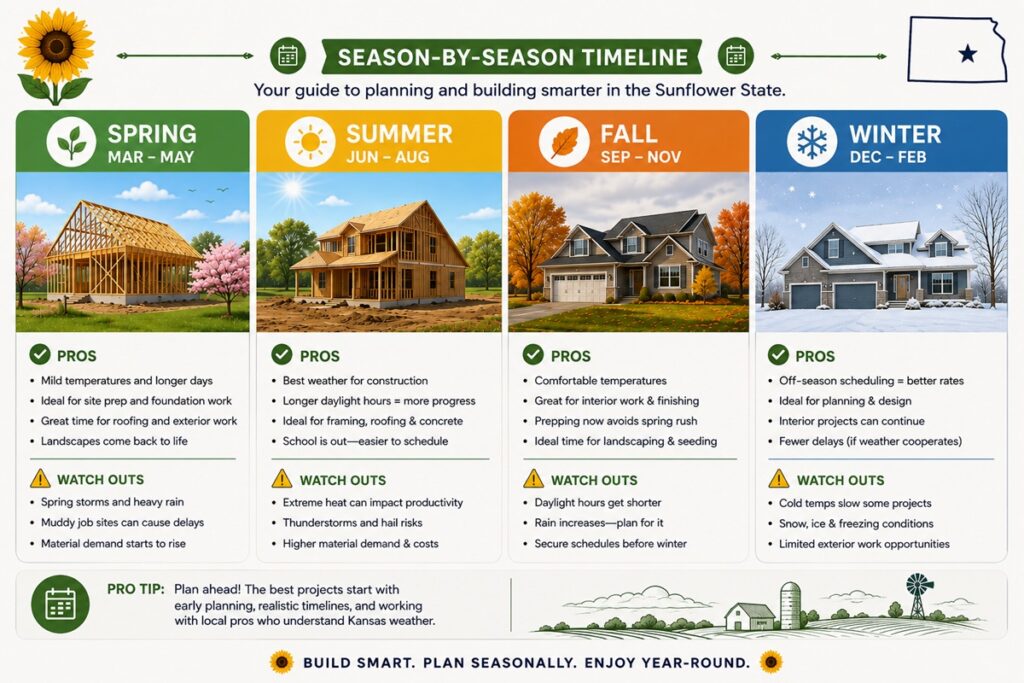
Kansas doesn’t give builders a neat four-season construction calendar. Each season brings advantages, along with a few conditions to manage.
- Spring: Good temperatures for starting many projects, but rain and saturated soil can make excavation and site access difficult.
- Summer: Usually excellent for excavation and framing, with longer daylight hours. Extreme heat can affect workers, materials, and scheduling.
- Fall: Often one of the most comfortable periods for outdoor construction, but late starts can run into freezing temperatures.
- Winter: Definitely workable when the project is planned correctly. Concrete, excavation, and exterior work require more attention to temperature and site conditions, while interior work can continue.
The right home construction time depends on your schedule, since every season brings unique challenges, such as heavy rain and freezing temperatures that can compromise structural work. Successful building aligns specific construction phases with stable weather to protect both the foundation and your budget. No single season is ideal for every construction phase.
1. Spring Starts
Spring is the busiest time and the best time to begin building a home in Kansas. But it also brings heavy rain, thick mud, and wet soil that can delay your construction schedule, slow heavy machines, and make the job site hard to reach.
What Goes Well
- Better daylight: Longer daylight hours allow the crew to work more hours each day. It speeds up the early foundation and framing process.
- Dry Spells: Early spring brings clear, mild days that let framing and concrete dry quickly and properly.
- Crew Availability: Contractors line up their yearly schedules; this means workers are ready to start before heavy summer heat begins.
- Material flow: The supply chain runs more smoothly in spring, and demand starts to increase, peaking in summer and causing factory delays.
Mud Rain Delays and Site Access
Kansas soil holds a lot of water, and spring storms can quickly turn job sites into thick, sticky mud. Heavy concrete trucks and delivery cranes can quickly get stuck in wet dirt, causing work to pause. Ruts or new-build dirt roads can turn into mud traps, blocking heavy equipment from safely reaching the house pad, while unfinished roofs let rain damage open subfloors and framing work during storms, creating a high moisture risk.
2. Summer Starts
Summer is often the best time to build a home because dry weather lets framing and concrete work dry quickly. It also offers longer daylight hours, helping workers finish tasks faster. However, high demand for builders means you need to book a builder early.
Faster Framing Window
- Dry Weather: Summer weather is dry, keeping the wood dry and safe.
- Long Days: Longer daylight lets the crew work more hours each day.
- Quick Pours: Concrete foundations cure quickly in warm air.
- Fewer Delays: Storms may happen sometimes, but a clear week lets framing finish quickly with fewer delays.
Heat and Trade Availability
Summer brings the most demand for building work, keeping builders very busy. Reliable, top contractors book up quickly, so you need to hire them early. Extreme heat typically slows the workers in the afternoon, so crews often start work at dawn to beat the heat. High demand may also delay steel and wood deliveries.
3. Fall Starts
If you are planning a home-building project in Kansas in the fall, you’ll get solid ground and crisp air. Still, builders must hurry to pour concrete before freezing temperatures, which usually arrive in mid- to late October.
Ideal Ground Conditions
- Firm Soil: In fall, the summer rain stops, and the earth dries out, letting heavy diggers and trucks move easily without getting stuck in mud.
- Early Digging: Cool air makes the weather ideal for workers, allowing the crew to work all day comfortably.
- Good Concrete Curing: Fall temperatures are moderate, which helps concrete dry evenly and gain full strength without cracking.
Racing the First Freeze
In Kansas, the first hard freeze, with temperatures dropping, typically arrives by late October and early November. This creates a major construction challenge because builders can’t pour concrete into frozen ground, so they rush to complete the basement and foundation before the freezing season arrives. The main goal is to get it dried in and complete the roof and walls to enclose the house so that indoor work can continue safely.
4. Winter Starts
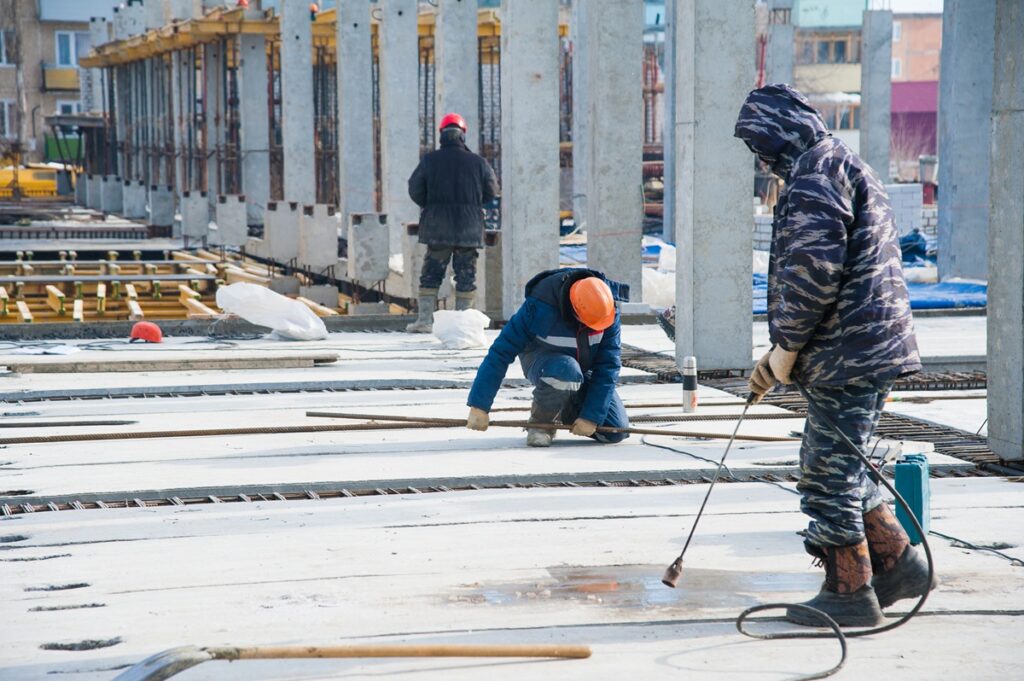
Winter slows concrete work, and the crew shifts to focus indoors. Home builders manage cold-weather concrete pours with special additives and resequence tasks to keep workers inside and safe from cold weather.
Cold Weather Concrete and Admixtures
- Freezing Risk: Water in concrete freezes and expands, which further weakens the foundation.
- Heated Mixes: Concrete plants heat the water and aggregate before mixing.
- Accelerators: Builders use chemical admixtures like calcium chloride to make the concrete set and cure much faster.
- Warm Blankets: The builder covers the fresh concrete with an insulated blanket and uses heaters to trap heat until it hardens.
Interior-Heavy Sequencing
Builders rush to build the roof and exterior walls before heavy snow hits, creating a weatherproof shell. The crew focuses on indoor work on drywall, painting, cabinets, and flooring out of the wind. They install a temporary heater inside the house so materials don’t freeze or warp. Scheduling delays happen because exterior work like landscaping and driveways waits until spring.
Working Backward From Your Move-In Date
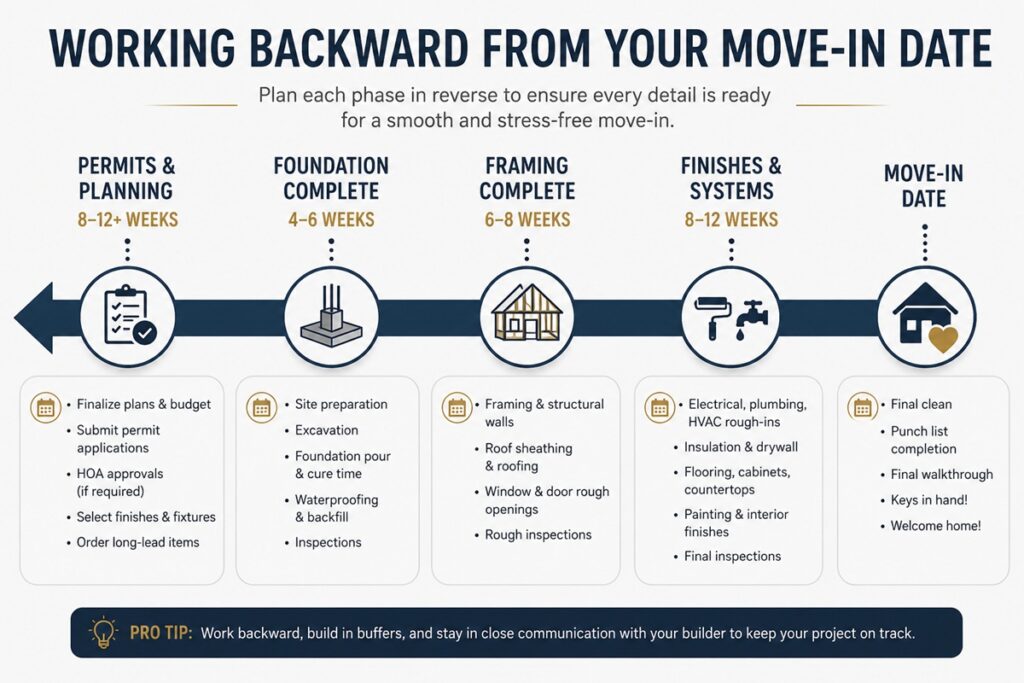
If you are wondering when to start building a house, the best approach is to start with your move-in date and work backward. This makes the whole building process easier to understand. Working backward from your move-in date means you pick your target finish day first. Then you subtract the time needed for each step of building a house. This tells you the exact date you must start the very first step.
Instead of choosing a month first, you must consider the full construction schedule and see where weather, materials, inspections, and other work can affect your home-building timeline. At this stage, the homeowner will typically ask, “How long does it take to build a custom home? The answer depends on the size, design complexity, site, materials, and level of customization.
The timeline and schedule will differ significantly between a simple home and a highly detailed custom home. Rainy seasons and cold temperatures can affect concrete and delay exterior work. However, highly experienced home builders know how to protect your outdoor work from weather damage.
Not all parts of construction depend on outdoor weather. Once the home is dried, many interior tasks can continue despite Kansas weather challenges. The right home builder will keep schedules flexible instead of waiting for perfect weather.
Lead Times You Can’t Schedule Around
Weather is not the only thing that can slow a home-building project. Materials can also cause unexpected delays if you don’t order them in time. Construction material lead times can affect windows, doors, cabinets, appliances, flooring, plumbing fixtures, lighting, and specialty finishes. Some products may take much longer depending on availability and demand.
Your builder needs to know the sizes and specifications early enough to coordinate electrical, plumbing, and cabinet work correctly. Summer can be especially busy because many homeowners want to build during the warmer months. Builders, subcontractors, and suppliers can become heavily booked, making early planning even more important.
Your custom home builder Kansas should help you understand which choices are urgent and which ones can wait. So when deciding when to start building a house, look beyond the weather. Look at the full project calendar, including materials, trade availability, and the decisions you need to make before construction reaches each stage.
FAQs
- Is winter a bad time to pour a foundation in Kansas?
Not necessarily. A cold-weather concrete pour can work when you carefully manage temperatures, ground conditions, and concrete protection. Builders may use heated materials, admixtures, insulated blankets, and temporary heat.
- How long does a custom home take from contract to keys?
It depends on the home’s size, design, site, materials, and weather. When asking how long it takes to build a custom home, remember that permits, selections, inspections, and material availability can also affect the schedule. Your builder should provide a timeline based on your specific project.
- Which months bring the most weather delays here?
May and June (spring) can bring heavy rain, saturated soil, and muddy job site conditions. January and February also bring significant cold-weather interruptions. Good planning helps manage these weather delays in home construction.
- Does starting in spring cost more than starting in fall?
Both seasons have different challenges. Spring can bring rain and muddy soil, while late fall can bring freezing temperatures. When comparing a spring vs. fall home build, your lot conditions, builder availability, material timing, and desired move-in date matter even more than just the season alone.
- How do material and appliance lead times affect my start date?
They can affect the schedule significantly. Windows, cabinets, appliances, doors, and specialty finishes may require early ordering. Understanding construction material lead times helps your builder coordinate deliveries with each construction stage and avoid delays.
Talk to a Kansas Builder About Your Timeline
So what is the best Kansas home construction season? The simple answer is that no single month is best. All seasons work if you plan the construction schedule correctly, and for that, you need a reliable home-building expert. In this guide, we explained the challenges and perks of each season. This is the real Kansas building calendar. The season matters, but the sequence is most important.
If you are still deciding when to start building a house, begin with your move-in goal and work backward. Consider your design, permits, foundation, framing, material orders, inspections, finishes, and possible weather interruptions. An experienced custom home builder in Kansas can help you understand how those pieces fit together and create a schedule that fits your home and property.
At Drippe Homes, we build your home with the Kansas conditions in mind; we plan each stage carefully and keep the project moving wherever conditions allow. Ready to plan your new home? Contact us to learn the estimated timeline and find out how to make your home-building schedule work for you.